Design
Choosing the Right Pool Finish
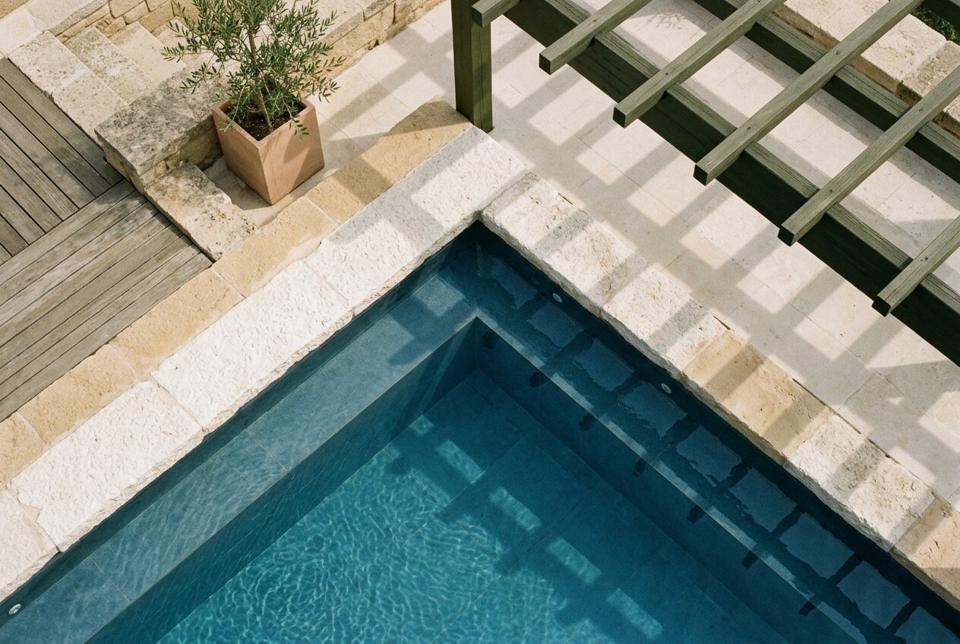
The interior finish is the surface you see every day, the one you touch when you swim and the one that decides the colour of the water. It also has to withstand intense ultraviolet light, hard calcareous water and, near the coast, salt air. There is no single best pool surface in Spain, but there is usually a best choice for a given pool, budget and way of living.
What matters on the Costa Blanca
Before comparing materials, it helps to know what the local conditions ask of them.
- Sun. With over 300 sunny days a year, UV exposure fades some pigments and degrades some organic materials faster than in northern Europe.
- Hard water. Water across Alicante province is high in calcium. Scale deposits at the waterline and in grout joints, and porous surfaces are more prone to marking.
- Salt. Salt chlorination is common. Some natural stones and certain grouts react poorly to saline water over time.
- Temperature swings. A pool left empty in summer heat can suffer stress in its finish. Most finishes are designed to remain under water.
The main finishes compared
Gresite and glass mosaic
Gresite, a small-format vitreous mosaic, is the traditional Spanish pool finish, and glass mosaic is its more refined relative. Both are durable, colourfast and handle hard water and salt well when properly installed. The weak point is the grout: it should be a suitable epoxy or cementitious pool grout and is where scale and staining tend to show. Glass mosaic in blended tones gives the familiar shimmering depth.
Porcelain
Large-format porcelain tiles rated for pool use give a calm, contemporary surface with fewer joints. They are very resistant to UV, salt and chemicals. Installation is demanding: the shell must be accurately flat, and curves are difficult. Porcelain pairs well with matching coping and terrace for a continuous look.
Natural stone
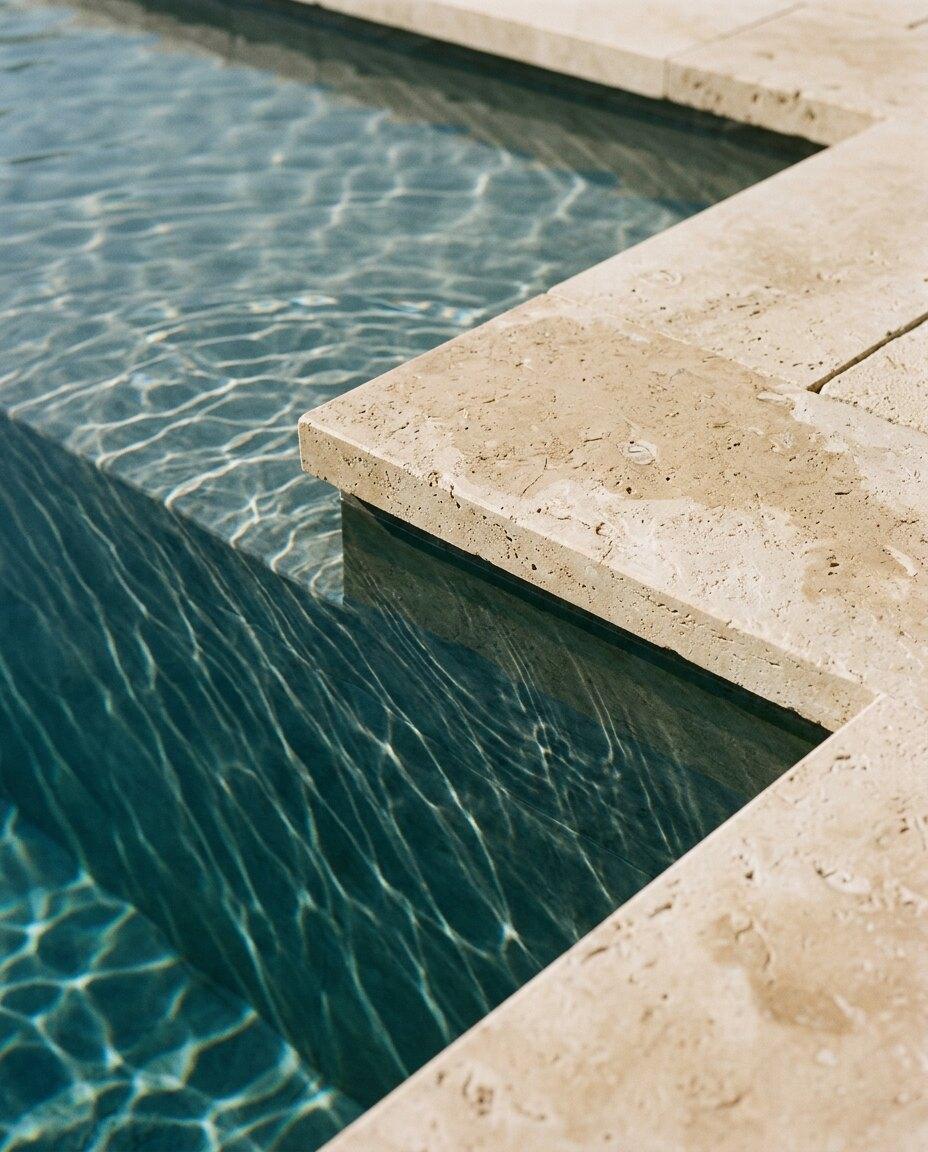
Stone linings, often limestone or quartzite, create a natural, architectural feel. Selection is critical: the stone must be dense, low in porosity and compatible with the chosen water treatment. Some limestones are affected by salt or low pH. Stone is generally a premium option and benefits from expert specification.
Micro-cement
Micro-cement gives a seamless, soft, mineral finish without joints. Systems designed for submerged use exist, but performance depends heavily on the product and the applicator. It needs balanced water chemistry and may require resealing over time. In hard water, the waterline should be kept clean to avoid visible scale marks.
Reinforced PVC membrane (liner armado)
A reinforced PVC membrane is welded on site over the existing shell. It is watertight in itself, which makes it a practical answer for older pools with minor leaks, and it is installed relatively quickly. Modern membranes come in textured and printed designs. It can be punctured by sharp objects, though repairs are usually simple, and lifespan varies with sun exposure and water chemistry.
Paint
Pool paint, usually chlorinated rubber or epoxy, is the least expensive option and can refresh a sound concrete pool. In strong sun it tends to chalk and fade, and repainting is typically needed every few years. It suits a short-term solution better than a long-term finish.
Indicative comparison
| Finish | Indicative cost (excl. IVA) | Durability | Hard water and salt |
|---|---|---|---|
| Gresite / glass mosaic | ~€70–150/m² incl. removal and waterproofing | High | Good; grout needs care |
| Porcelain | Generally above mosaic | High | Very good |
| Natural stone | Premium; varies by stone | High if well specified | Depends on the stone |
| Micro-cement | Varies by system | Moderate; may need resealing | Needs balanced chemistry |
| Reinforced PVC membrane | ~€50–70/m² | Moderate to good | Good |
| Paint | €12–20/m² | Low; repaint every few years | Fair |
How the finish colours the water
The water itself is nearly clear. What you see is the finish, filtered through depth and sky. The same tone looks lighter at the shallow end and deeper at the far end.
- White: bright turquoise in sun. Very luminous, shows debris and scale more readily.
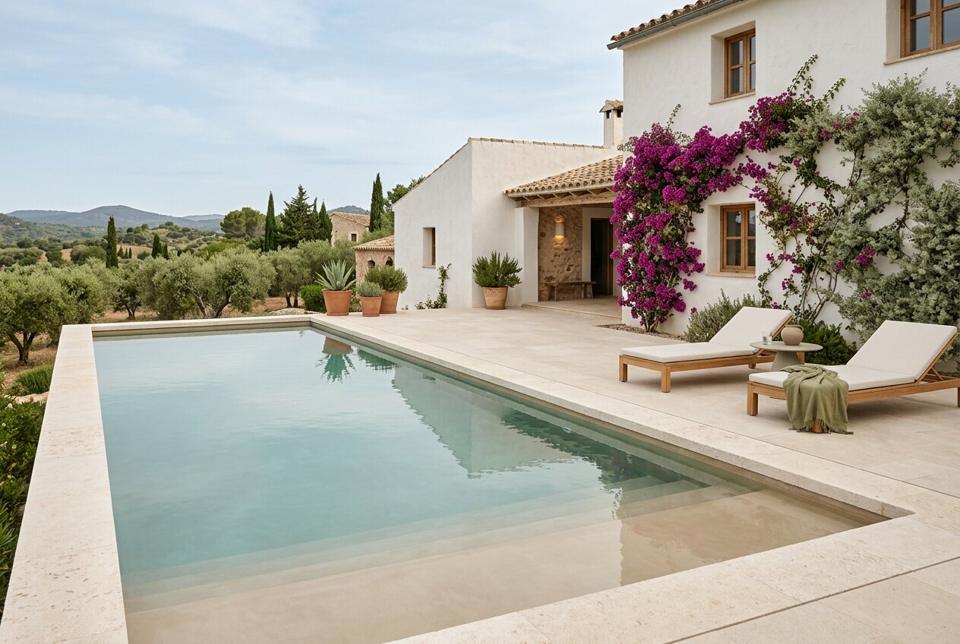
- Sand and beige: soft green-turquoise, close to a Mediterranean cove. Warm and forgiving, it suits natural stone terraces.
- Light grey: a cooler, sea-like blue-green. Contemporary and calm, it suits minimalist architecture.
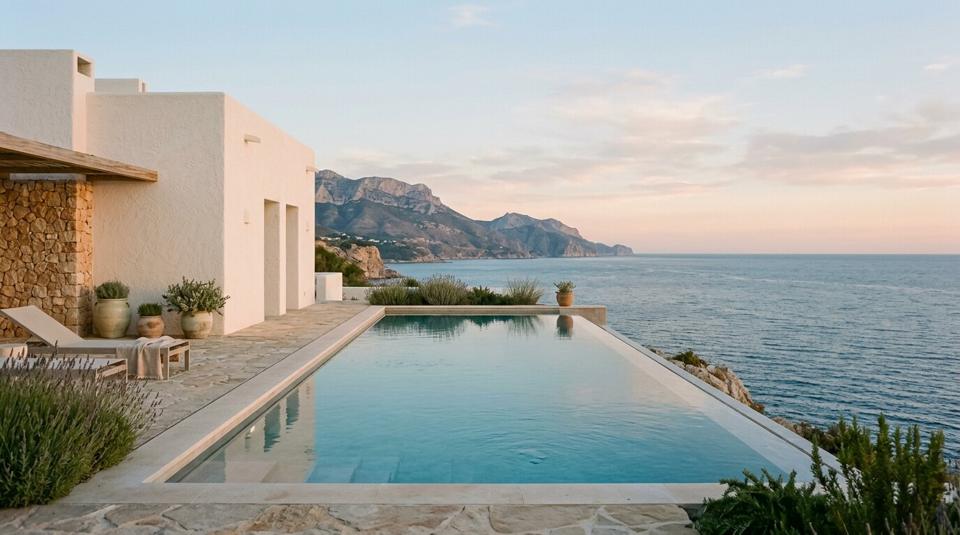
- Dark grey and black: deep blue to reflective, almost mirror-like water. Dramatic with sea views and absorbs more heat, though it can show limescale marks and makes depth harder to read.
Always look at samples wet, outdoors and in strong light. A small sample indoors rarely predicts the effect across a whole pool.
Maintenance and lifespan
Every finish lasts longer when the water is balanced. On the Costa Blanca that mainly means controlling pH and calcium hardness so that scale does not form, and avoiding aggressive water that etches grout and stone. A regular brush of the waterline, where scale and sun cream residues collect, prevents most visible marking. Automated pH dosing, often fitted alongside a salt chlorinator, makes this much easier to maintain while you are away.
Lifespans vary with installation quality, water chemistry and exposure, so treat any figure as a broad indication. Well-installed mosaic and porcelain commonly last for decades, with grout attention along the way. Reinforced membranes are generally expected to last many years, often with manufacturer warranties stated in the product documentation. Paint is a short-cycle finish by nature. Ask for the manufacturer's technical data sheet and the conditions of any warranty, including the water parameters it assumes.
Finally, avoid leaving any finish dry and exposed to summer heat for long periods. If the pool needs to be emptied for repairs, plan the work for cooler months where possible.
Choosing for your pool
Consider the condition of the shell, how long you intend to keep the property, the water treatment you plan to use and the architecture around the pool. A watertight shell in a villa you plan to keep suits mosaic, porcelain or stone. An older pool with minor leaks may be better served by a reinforced membrane. For new builds, the finish should be chosen alongside the coping and terrace. See our pages on new pools and pool renovation, or the guide to pool renovation costs on the Costa Blanca.
How Solmarea can help
Solmarea Pools designs and manages pool projects on the Costa Blanca from the first visit to the final handover. We help you narrow the finish options against your pool and priorities, set out a detailed budget, and coordinate the preparation, waterproofing and installation of the chosen finish. One team and one point of contact. To begin, start your project.