Renovation
Pool Renovation: What Can Actually Be Changed?
An existing pool is a concrete structure with its own logic: a shell, a hydraulic circuit and a relationship to the house and terrace. Some changes work with that logic and are relatively simple. Others cut against it and require structural work, engineering input and sometimes a licence. Knowing which is which helps you set realistic goals before the project study.
Changes that are usually straightforward
These alter how the pool looks and performs without touching the structure. They are the core of most renovations.
- Interior finish. Replacing tired tiles or paint with gresite mosaic, porcelain, micro-cement or a reinforced PVC membrane is the most visible change you can make. The shell is inspected and waterproofed in the process. See choosing the right pool finish for the trade-offs.
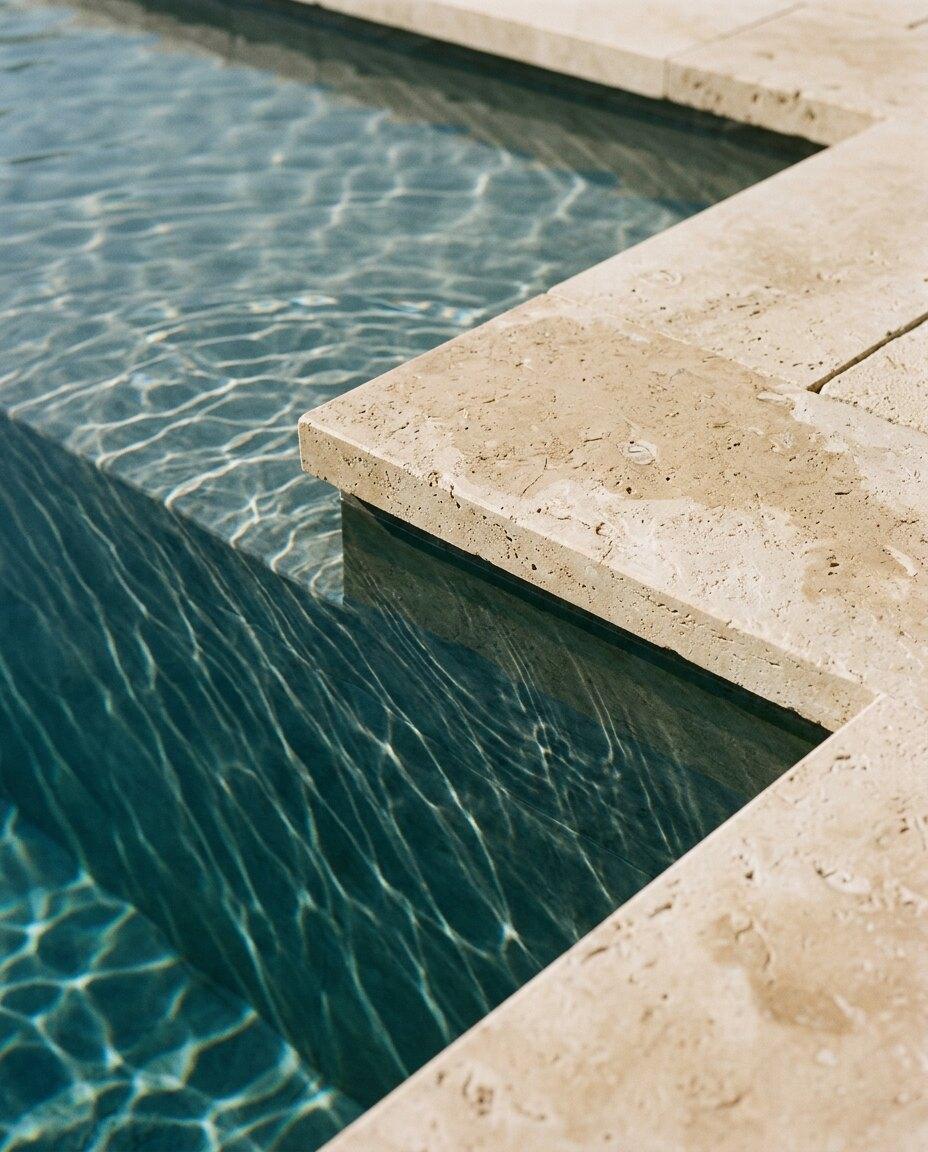
- Coping. The stones around the edge can be replaced with natural stone, porcelain or a cast coping in a new profile. A flush or slightly recessed edge can modernise a pool considerably.
- Lighting. Old halogen niches can usually take LED fittings, and additional lights can be added with some work on the conduits. Low-voltage colour-temperature control is common.
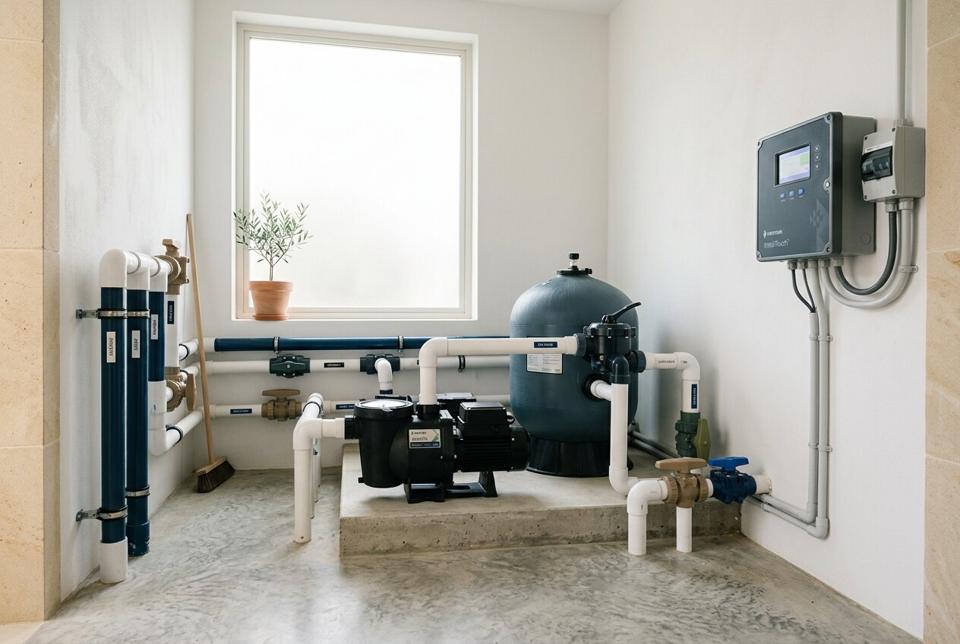
- Equipment. Pumps, filters, salt chlorinators, heat pumps and automation are all replaceable, provided the plant room has space and electrical capacity.
Changes that need more work
Steps and benches
Adding a new staircase, a wide entry step or an underwater bench is common and generally feasible. It involves building new concrete elements inside the shell, bonded to the existing structure, and waterproofing them. It reduces water volume slightly and adds surface to line. Removing existing steps is also possible, though demolition inside a shell must be done carefully.
Beach entry
A gently sloping beach entry is popular with families and gives a calm, natural look. In an existing pool it usually means either building up a ramp within the shallow end, which shortens the swimmable length, or extending the shell outwards, which is a structural extension. Which option suits depends on the pool size and how much terrace you have.
Depth
Making a pool shallower is relatively simple: the floor is raised with new concrete. Many owners of older pools with a deep diving end choose this, as deep ends add volume to heat and treat and are rarely used. Making a pool deeper is far more involved, requiring excavation beneath the existing shell and usually a new floor structure. It is often closer to a rebuild.
Pipework and hydraulics
Older pools frequently have few return inlets and skimmers in awkward positions. Adding inlets, floor returns or a new skimmer improves circulation and water clarity, but involves cutting into the shell and running new buried pipes.
Changes that are structural
- Shape. Turning a kidney shape into a rectangle, or shortening or lengthening the pool, involves demolishing and building walls. Reducing size is usually simpler than enlarging it.
- Infinity conversion. Turning one side into an overflow edge is possible where the pool faces a view and the ground falls away. It requires lowering the wall to a precise level, building a catch channel below it, adding a balance tank and upgrading pumps. Wind, which can be strong on exposed headlands, affects how evenly water spills. Our guide to infinity pools on the Costa Blanca covers the design principles.
- Overflow (deck-level) edge all round. Similar in principle to an infinity edge but on every side, with a perimeter grating. A major intervention in an existing pool.
- Repairing structural damage. Significant cracks or corroded reinforcement may call for a new gunite layer over the old shell or partial rebuilding.
Structural changes generally need a qualified technician's assessment and often a municipal licence. On sloping plots in Jávea, Moraira or Altea, the retaining walls supporting the pool also need to be considered.
Feasibility at a glance
| Change | Typical complexity | Usually structural? |
|---|---|---|
| New interior finish | Low to moderate | No |
| New coping | Low to moderate | No |
| LED lighting | Low | No |
| Equipment upgrade | Low to moderate | No |
| New steps or bench | Moderate | Minor, inside the shell |
| Making shallower | Moderate | Minor, new floor |
| Beach entry | Moderate to high | Sometimes |
| Making deeper | High | Yes |
| Changing shape or size | High | Yes |
| Infinity conversion | High | Yes |
This is a general guide only. The condition of your particular shell, the ground and access to the site can move any item up or down the scale. Combining several moderate changes in one intervention, such as new steps, a shallower floor and extra return inlets, is often more efficient than spreading them over several seasons, because the pool only needs to be emptied, prepared and re-lined once.
The terrace and surroundings
Often the most transformative change is not in the water at all. Replacing a dated terrace with large-format stone or porcelain, adjusting levels so the pool sits flush with the house, adding shade, an outdoor shower or planting can change how the whole garden is used. Choose surfaces that stay comfortable underfoot in August sun, which generally means lighter tones, and that offer slip resistance when wet. Our outdoor living page covers this wider space.
Setting priorities
Few owners change everything at once, and few need to. A useful way to decide is to list what bothers you about the pool today and sort each item into one of three groups: what affects safety or watertightness, what affects comfort and running costs, and what is purely aesthetic. The first group comes first, always. The second often pays for itself over time. The third is where personal taste and budget decide.
It is also worth thinking about what would be costly to do later. Any change that requires emptying the pool and cutting into the shell, such as new steps, extra return inlets or conduits for future lighting, is best done in the same intervention as a new finish. Equipment can be upgraded afterwards with far less disruption. If you are considering heating, automation or a cover in the next few years, plan space in the plant room and spare conduits in the terrace now. Our page on pool modernisation covers these upgrades.
How Solmarea can help
Solmarea Pools designs and manages pool renovations on the Costa Blanca from the first inspection to the final handover. We separate the straightforward from the structural, set a clear scope and a detailed budget, and coordinate every trade involved. One team and one point of contact. When you are ready, start your project with a few photos of the pool and terrace.