Design
How to Design the Perfect Pool Area for a Mediterranean Villa
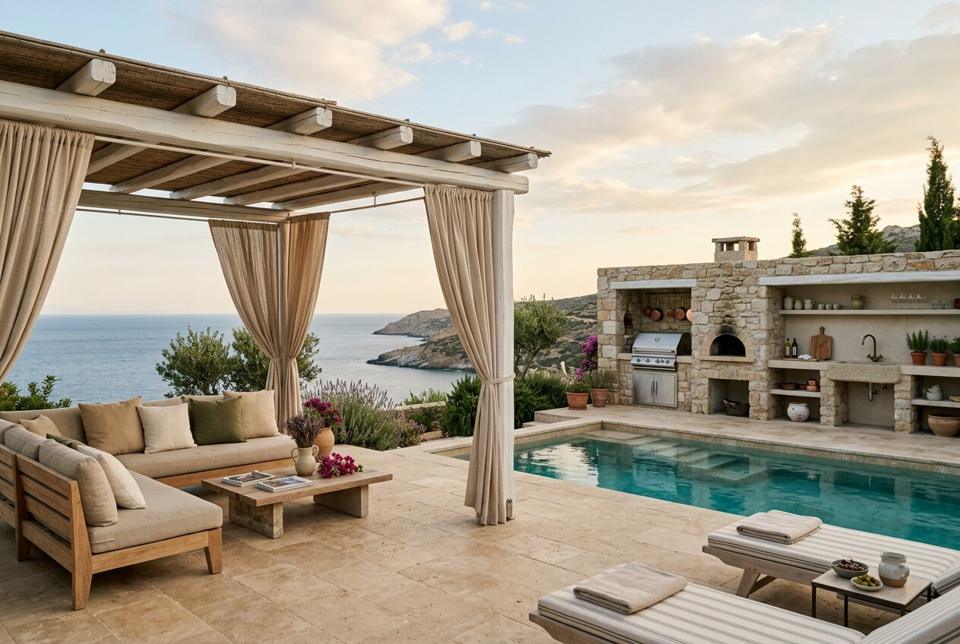
The pool is rarely the hard part. What makes a villa pool area good to live with is everything around it: where the sun falls at four in the afternoon, which way the wind blows, how warm the stone is underfoot and how many steps it takes to bring a tray from the kitchen. These decisions are best made together, early, and with the site in front of you.
Orientation and the path of the sun
On the Costa Blanca the sun is strong for most of the year, and the way it moves across the plot shapes everything else. A pool that receives sun from late morning to evening stays warmer and is used longer into the season. A pool shaded by the house in the afternoon can feel cold even in June.
Some practical starting points:
- South to south-west exposure generally gives the most usable water temperature and the longest season.
- West-facing terraces catch the evening light and sunsets, but in July and August they can be uncomfortably hot without shade.
- Winter sun is low. A wall, hedge or neighbour's building that seems harmless in summer can shade the pool completely from November to February.
Ask your designer to show sun studies for at least three dates — midsummer, the equinox and midwinter — at different times of day. It is a quick exercise with today's tools and often changes where the pool and terrace go.
Wind, privacy and views
Wind
Coastal plots catch the wind. The easterly levante often brings humid air and choppy conditions; the westerly poniente can be hot and dry in summer and drives evaporation; northerly winds make winter afternoons feel cooler than the thermometer suggests. A pool area exposed to the prevailing wind loses heat and water faster, and is less pleasant to sit in. Low walls, glass balustrades and dense planting on the windward side can create a sheltered pocket without blocking the view.
Privacy
On hillside plots in Moraira, Benissa or Altea, the house above often looks directly down onto the pool below. Privacy is easier to design in than to add later. Consider sightlines from neighbouring terraces and roads, not just from the boundary. Planted screens, pergolas, level changes and the position of loungers can all help, often more naturally than high walls — which may also be limited by local planning rules.
Views
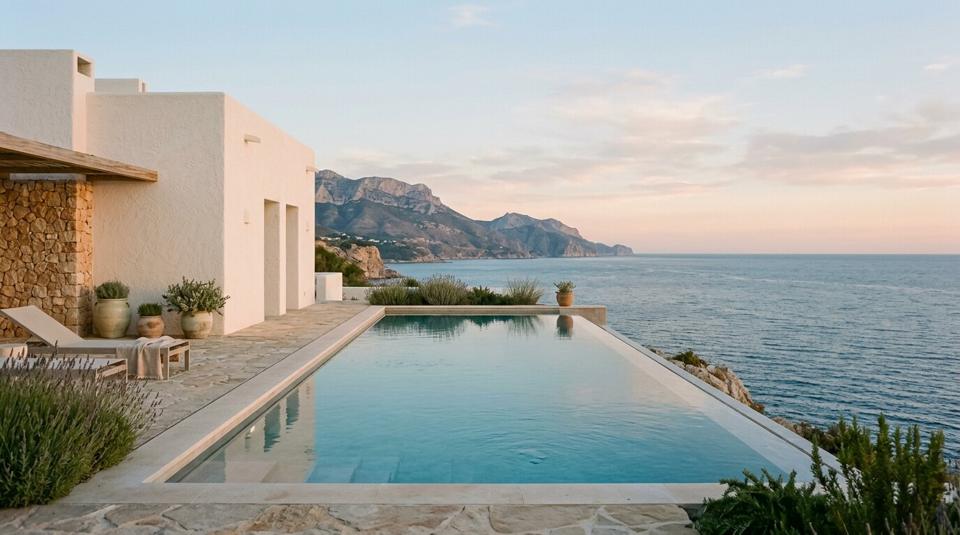
Frame the view rather than simply exposing it. Decide which part of the panorama matters — the sea, a headland, the mountains — and orient the pool, the main seating and the dining area towards it. On sloping plots, an infinity edge may be worth considering; see infinity pools on the Costa Blanca.
Shade and pergolas
In a Mediterranean summer, shade is not an accessory; it decides whether the terrace is used between noon and six. A good pool area usually combines several types:
- Fixed structures — a pergola or a covered porche attached to the house, giving reliable shade for dining and lounging.
- Adjustable shade — bioclimatic pergolas with rotating louvres, retractable awnings or sail shades, which let winter sun through and block summer sun.
- Natural shade — vines, trained bougainvillea or a carefully placed tree, which also cool the air through transpiration.
Keep in mind that larger structures may need a licence or have to respect setbacks, depending on the town. Place shade where people sit, not over the water itself, unless you want a cooler pool.
Terrace materials: grip and heat
Around a pool, materials are walked on barefoot and wet. Two qualities matter more than appearance:
- Slip resistance. The Spanish building code classifies floor slip resistance in classes; for wet exterior areas such as pool surrounds, the highest class (Class 3) is typically specified. Ask the supplier for the tested rating rather than relying on a description like "textured".
- Surface temperature. Dark stone and some porcelain tiles can become too hot to stand on in August. Light-coloured, matt materials stay noticeably cooler.
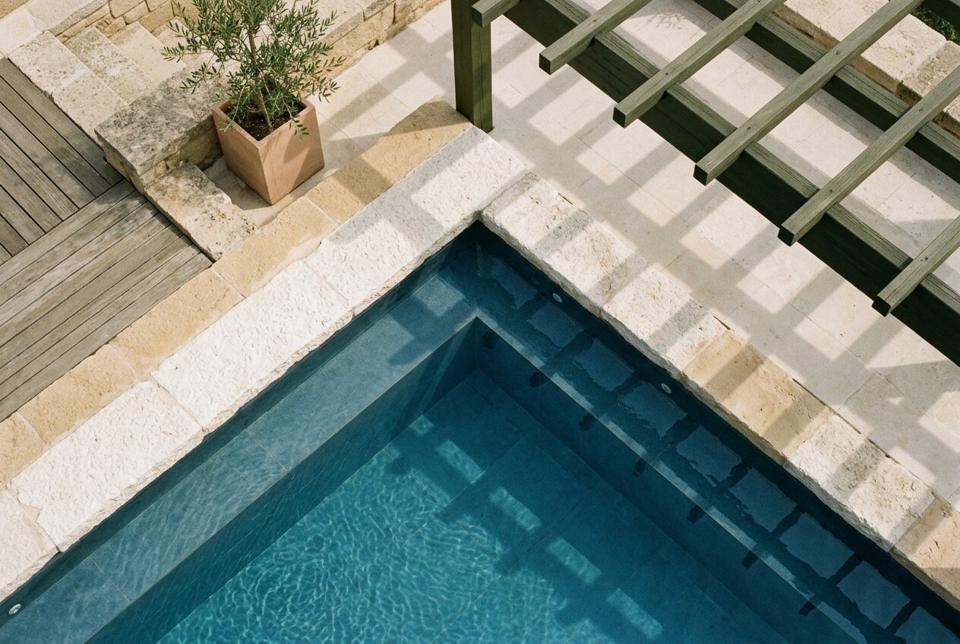
Common choices on the Costa Blanca include light limestones, travertine, sandstone and outdoor porcelain in stone tones. Natural stone has warmth and ages well, but porous types need sealing and care, particularly near a saltwater pool. The coping deserves special attention: it is touched, sat on and splashed more than any other surface. For more on finishes and how they behave in local hard water, see choosing the right pool finish.
Showers, kitchens and circulation
Outdoor shower
An outdoor shower between the pool and the house keeps sand, sunscreen and chlorine out of the interior. Place it on the natural route back, with a drained base and enough privacy to be used comfortably. A warm-water connection is worth planning from the start.
Outdoor kitchen
An outdoor kitchen or barbecue area works best close to the indoor kitchen, under shade, and downwind of the main seating so smoke drifts away. Keep cooking and glassware at a sensible distance from the pool edge. Plan water, drainage, power and lighting together with the pool works, rather than chasing trenches afterwards.
Circulation
Walk the plot as you will use it: from the living room to the pool, from the pool to the shower, from the kitchen to the dining table. Avoid routes that cross the lounging area, steps in unexpected places and long detours around planting. On terraced plots, generous, shallow steps are safer and more pleasant than steep ones.
Lighting and planting
Lighting
Evening is when many Costa Blanca pool areas are most enjoyed. Layer the light: soft pool lighting in warm white, low path lights at step edges, gentle uplighting on trees or walls, and a dimmable source for the dining table. Avoid bright floodlights that flatten the space and disturb neighbours. LED fittings keep consumption low.
Planting
Mediterranean planting suits the climate, needs little water once established and looks right against stone. Olive trees, carob, lavender, rosemary, santolina, cistus, ornamental grasses and Mediterranean fan palms are all common choices. Near the pool itself, think practically:
- Avoid trees that shed heavily — many pines, deciduous species — directly beside the water.
- Keep trees with aggressive roots, such as some ficus species, well away from the pool shell and pipework.
- Use drip irrigation on a timer, and remember that summer water restrictions can apply in some municipalities.
- Prefer gravel or permeable surfaces in planted areas to reduce heat and runoff.
The landscaping section of our outdoor living page outlines how pool and garden works can be coordinated.
Bringing it together, and how Solmarea can help
A well-planned pool area is the result of a few clear decisions made in the right order: orientation and views first, then wind and privacy, then shade, materials and the details of daily use. Getting the pool builder, landscape designer and, where needed, an architect working from the same brief makes a noticeable difference.
Solmarea Pools designs and manages pool and outdoor-living projects on the Costa Blanca from the first site visit to the final handover. We study the plot, design the pool and the space around it as one composition, prepare a detailed budget and coordinate every trade involved — pool construction, paving, lighting and landscaping. One team and one point of contact. To begin, start your project with a short description and a few photos of the site.