Renovation
How to Modernise an Old Swimming Pool
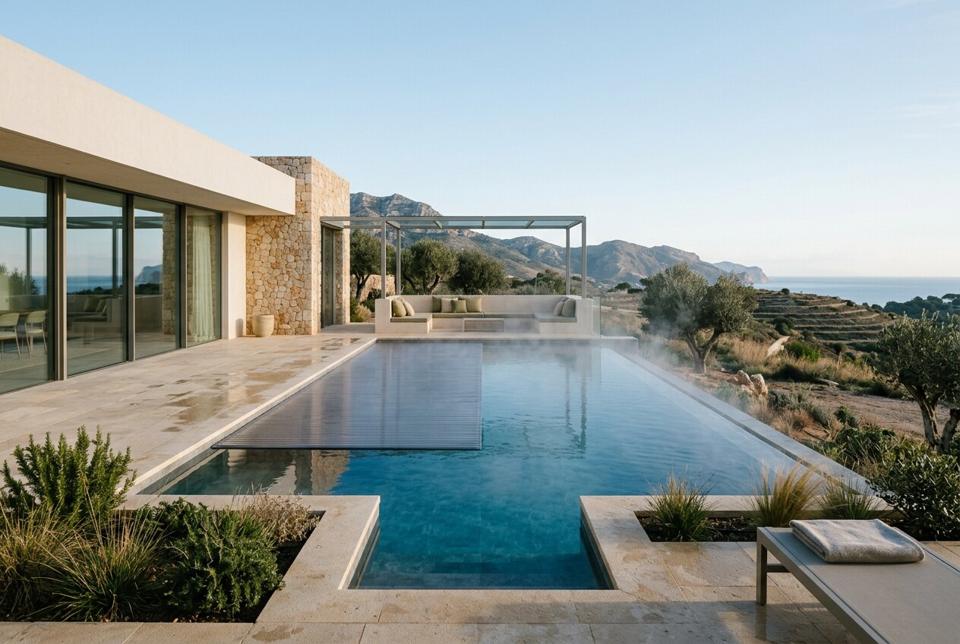
An old pool is not necessarily a bad pool. Many pools built on the Costa Blanca twenty or thirty years ago have solid concrete shells and sit in well-chosen positions. What tends to date them is the finish, the edge detail, the equipment and the way they consume water and energy. Modernising them well is a matter of sequence: understanding what you have, then deciding what to change and in which order.
Step one: assess what you have
Before deciding how to renovate an old pool, establish its condition. A proper inspection covers:
- Watertightness. A simple bucket test compares evaporation with actual water loss. Persistent loss calls for professional leak detection.
- The shell and finish. Hollow tiles, cracks and staining reveal whether a re-lining is cosmetic or needs substrate repair.
- Hydraulics. The number and position of skimmers and returns, the diameter and age of pipes, and whether water circulates evenly.
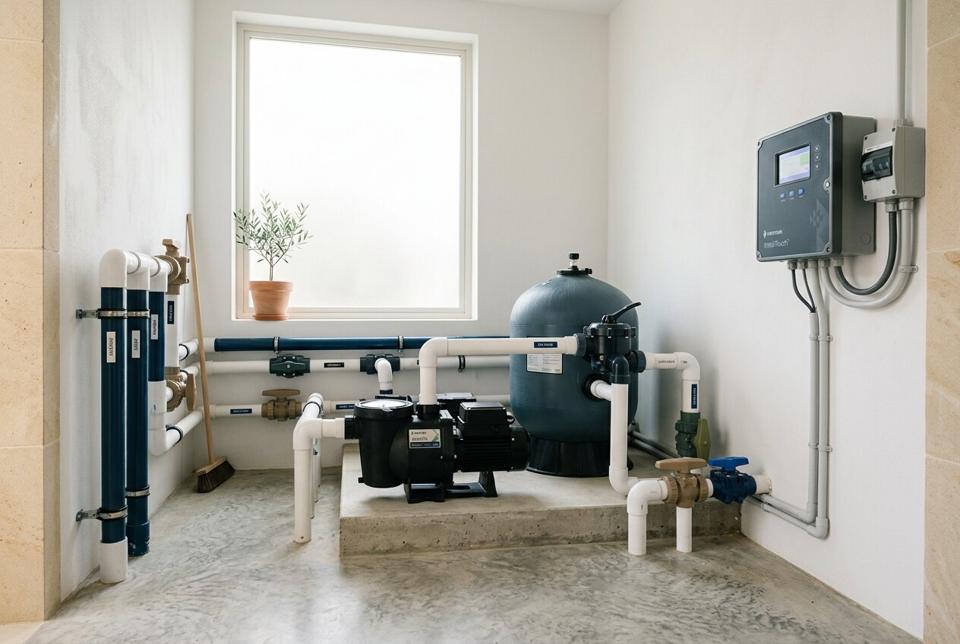
- Plant room. Pump type, filter condition, electrical panel, earthing and ventilation.
- Surroundings. Coping, terrace levels, drainage and safety.
This assessment tells you whether you are looking at a modernisation, a renovation or, occasionally, a rebuild. It also prevents the common mistake of investing in a new finish over a pool that leaks.
Step two: plan works in the right order
Doing things in the wrong order is the most expensive way to modernise a pool. A sensible sequence is:
- Repair leaks and structural defects.
- Make any changes to depth, steps, shape or hydraulics, since these mean cutting into the shell.
- Install new conduits for lighting and any new fittings.
- Waterproof and apply the new interior finish.
- Replace coping and terrace.
- Upgrade the plant room and commission the equipment.
Equipment upgrades can sometimes be done on their own, without emptying the pool. Anything that touches the shell is best grouped into a single intervention. If the budget does not allow everything at once, it is usually wiser to complete the shell work and finish properly now and phase the equipment, rather than the other way round. A new heat pump connected to a leaking pool, or a new lining laid before the pipework is replaced, is money spent twice.
Step three: the finish and the edge
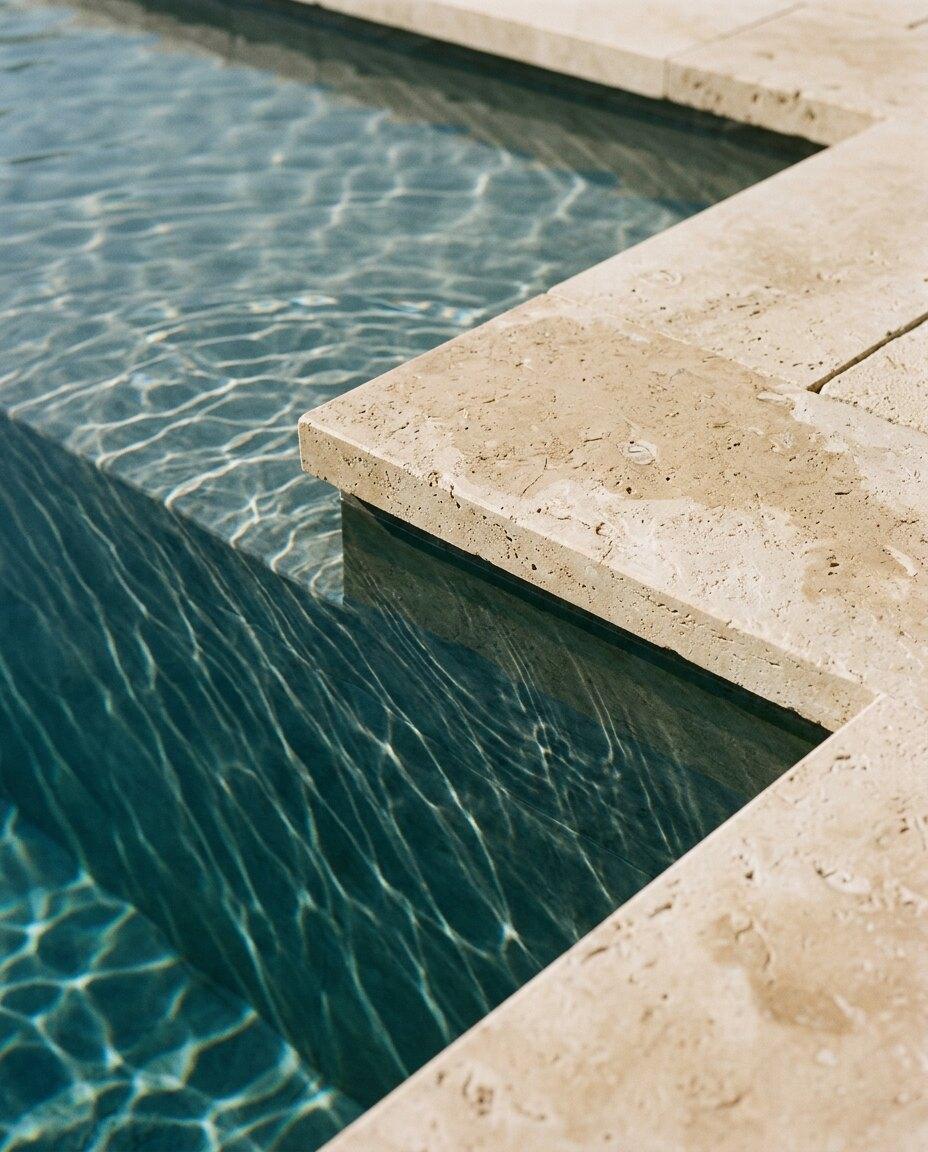
The interior finish and the coping do most of the visual work. Older pools often have small blue mosaic, a rounded bullnose coping and a terrace in a different stone. A contemporary approach tends to simplify: a single finish in a sand, grey or white tone, a slimmer square-edged coping, and a terrace material that continues to the house. Our guide to choosing the right pool finish explains how different surfaces perform in strong sun and hard water.
Reducing the depth of an old diving end is also worth considering. It lowers the volume of water to heat and treat, and the pool becomes more usable for families and for socialising in the water.
Step four: equipment and efficiency
This is where an old pool gains the most in comfort and running costs.
Variable-speed pump
Older single-speed pumps run at full power regardless of need. A variable-speed pump can run filtration cycles at lower speeds for longer, which typically reduces electricity consumption considerably. It is one of the most cost-effective upgrades.
Salt chlorination
A salt chlorinator produces chlorine from lightly salted water, reducing the handling of chemicals. With hard Costa Blanca water, the cell needs periodic descaling, and pH control is advisable. Salt can be aggressive to some natural stones and metal fittings, so materials should be chosen accordingly. Our article on saltwater versus chlorine pools sets out the trade-offs.
Heating and covers
An inverter heat pump can extend the swimming season from roughly four months to eight or ten in the mild Costa Blanca climate. For a pool of about 40 m³, an installed unit is indicatively around €3,500–4,500 (Alicante, 2025–2026 public market information). A cover reduces heat loss overnight and evaporation, which matters where summer water restrictions apply. Our modernisation page covers heating and covers in more detail.
Automation and lighting
Automation controls filtration schedules, heating, lighting and water chemistry from a phone, which is particularly useful for owners who spend part of the year elsewhere. LED lighting uses a fraction of the energy of halogen and allows warmer or cooler tones to suit the evening.
Step five: safety and surroundings
Older pools were often built with fewer safety considerations than are expected today. Modernisation is a good moment to review slip resistance on steps and coping, the depth markings, electrical safety in the plant room and around underwater lights, and whether a fence or a lockable cover is appropriate. This is particularly relevant for villas let to holiday guests, where municipal or regional rules may apply, and for families with young children.
The terrace deserves the same attention. Dated paving that becomes too hot underfoot in August, poor drainage that sends rainwater and debris into the pool, or levels that create awkward steps between house and water all limit how the space is used. Lighter, textured stone or porcelain, a gentle fall away from the pool and a level threshold from the living room can change the experience of the whole garden. Our outdoor living page looks at the space around the pool in more detail.
Living with the work
A full modernisation can leave a garden unusable for several weeks. If the property is let or you are only on the Costa Blanca for part of the year, plan the works for the low season and agree in advance how progress will be reported, who has access to the property and how the site will be left at the end of each stage. Clear arrangements at the start avoid most of the friction later.
Indicative budgets
Based on publicly available market information for Spain in 2025–2026, and excluding IVA (21%):
- A basic modernisation with re-tiling, new pump, filter and LED lighting starts from around €5,000–10,000.
- Re-lining an 8×4 m pool with gresite, including removal and waterproofing, is roughly €5,500–9,000.
- A full renovation with new coping, steps, terrace and equipment commonly ranges from €20,000 to €60,000 or more.
How Solmarea can help
Solmarea Pools designs and manages pool modernisations on the Costa Blanca from the first inspection to the final handover: a clear diagnosis, a sensible scope and sequence, a detailed budget, and coordination of every trade, from the shell to the plant room. One team and one point of contact. To begin, start your project with a short description and a few photos of the pool and plant room.